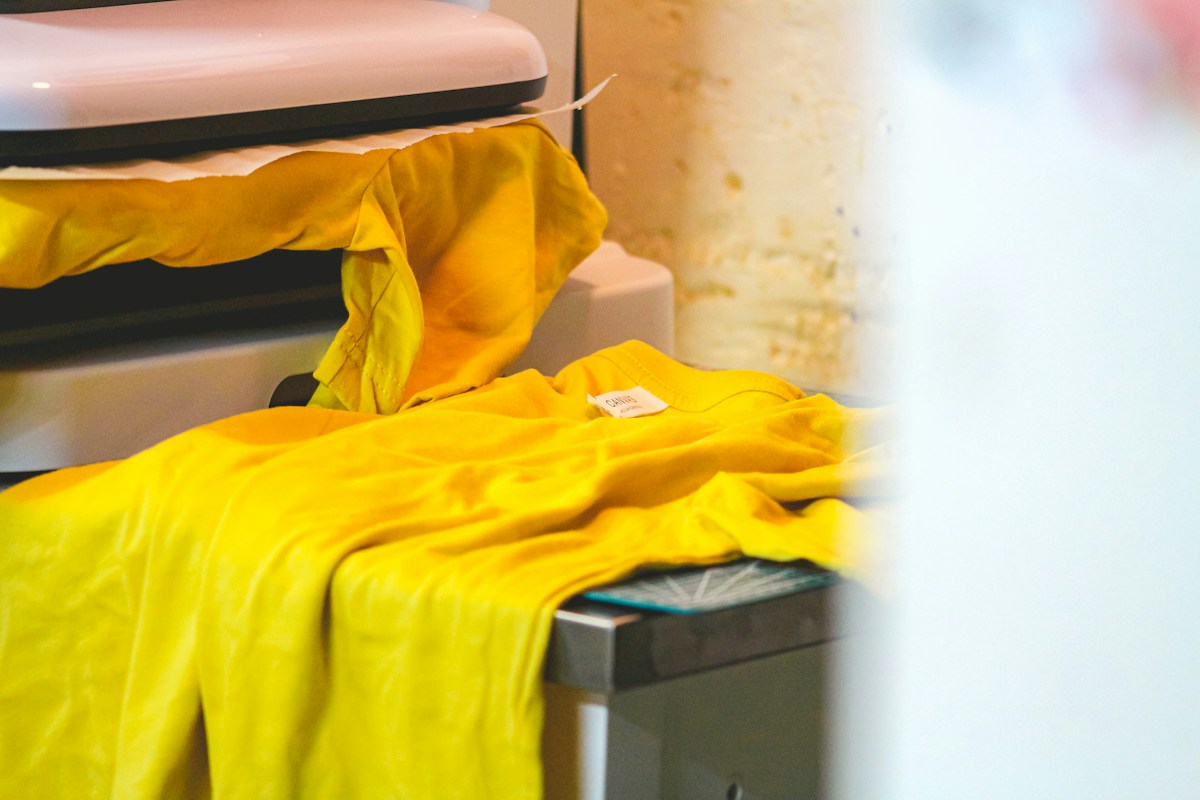
Illustrative heat-press workspace; this is not the reviewed VEVOR model or a Worth Filter test. Photo: Compagnons / Unsplash.
The right first heat press depends on your artwork, transfer materials and how costly a failed garment would be. Start with the platen size and workflow you need, then decide whether a cheaper manual machine or a more convenient automatic press is the better use of your money.
Research-based recommendation · Updated September 30, 2026. The Worth Filter team has purchased and used this model, finding that it works well and holds up well for home use. This guide combines the team’s firsthand feedback with published sources. Duration of use and repair history have not been documented; we have not conducted controlled comparative tests. The VEVOR link below is an ordinary retailer link; Worth Filter currently earns no commission from it.
Our recommendation: Consider VEVOR’s white 15×15 flat heat press for occasional T-shirt and tote-bag projects when you can test the machine before depending on it. Verify the supplied machine’s specifications before buying. We would not make it the sole press for a business with deadlines until it passes your own application and wash tests.
Budget manual press or automatic alternative?
The HTVRONT original Auto Heat Press also has a 15×15-inch platen and adds automatic pressing/release and a pull-out drawer. Its standard kit displayed $236 on the manufacturer site during our September 30 check, versus $154.90 on the exact VEVOR listing. Compare the selected kit contents and delivered prices; accessories, taxes and promotions can change the difference.
The VEVOR is a lower-entry-cost candidate for occasional flat projects if you accept manual operation and can resolve its conflicting temperature specifications. The HTVRONT deserves a closer look if its workflow features are worth the premium to you. We have not verified either machine’s heating uniformity or reliability, so this is a comparison of published features and current prices, not proof that the cheaper machine performs equally well.
The budget press we mean
This article covers model WBFHPM3804, SKU GDSYD1515110VBP0EV1, rather than every VEVOR 15×15 machine. Its US product listing specifies a 15×15-inch platen, adjustable pressure and digital time/temperature controls. The specification table lists 1,200 watts and a 0–999-second timer. It displayed $154.90 when checked; verify the current total before ordering.
Start with your actual artwork. Measure the complete design, including any placement margin you need. If it fits comfortably within a 15-inch square, this format deserves consideration. If your main job is oversized fronts or backs, compare a larger platen before spending money twice. For thicker blanks, confirm that the exact press accommodates the blank’s thickness; platen width alone does not establish that fit.
Who should consider it—and who should skip it
| Your work | Our judgment |
|---|---|
| Occasional flat shirts or totes | A reasonable candidate if you can verify results first. |
| Large artwork beyond the platen | Choose a size that fits your design in one application. |
| Mainly curved mugs or caps | Shop equipment designed for that shape. |
| Paid orders with tight deadlines | Require repeatable tests and a backup plan before relying on it. |
The specification problem to resolve
VEVOR’s own page conflicts: the features advertise 482°F, while its specification table says 450°F. Treat neither as a verified operating limit for your delivered unit. Request the matching manual and confirm the rating label, voltage and supported settings. If your intended transfer requires a temperature VEVOR cannot confirm, choose another press.
The press is only part of your budget
Allow money for blank garments, compatible transfers, protective materials and sacrificial practice pieces. Buying ready-made transfers can help you decide whether you even need a cutter or printer. A low equipment price does not make a failed batch inexpensive.
STAHLS’ beginner HTV guide explains that fabric compatibility, pressure, temperature, time and peel method depend on the transfer. Use your transfer supplier’s instructions; do not substitute a universal setting from a press listing. Its pressure guidance also identifies seams and pockets as obstacles to even application.
Before keeping a new press, make test pieces using your planned materials. Inspect the full design, document the settings and evaluate the garment after washing according to the transfer instructions. We have not verified this model’s heating uniformity, pressure consistency or long-term reliability.
Worth buying? It belongs on a beginner’s shortlist for measured, occasional flat projects. The unresolved specifications and untested performance make a cautious purchase more sensible than a blanket endorsement.